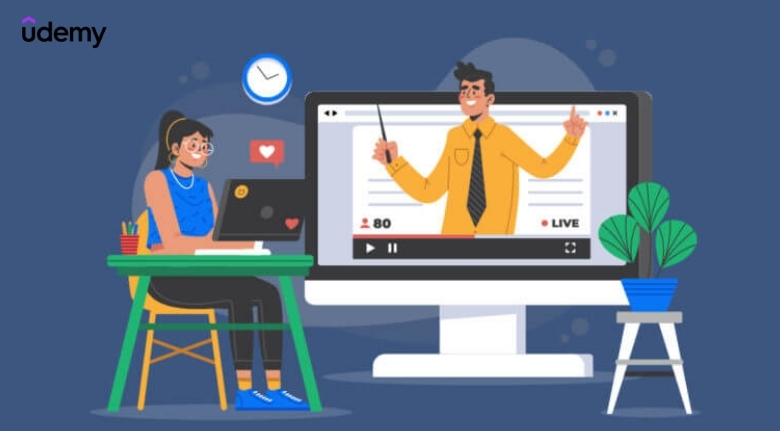
Learning no longer has to follow a traditional classroom schedule. Today, people can develop professional skills, explore creative interests, prepare for certifications, and improve their knowledge from almost anywhere. Online learning gives students, professionals, entrepreneurs, and curious learners the flexibility to study according to their own schedules.
Udemy is an online learning platform that offers courses across areas such as technology, business, personal development, design, marketing, programming, data science, languages, and many other subjects. Its learning model allows people to choose topics based on their current goals and interests.
Whether someone wants to strengthen an existing skill or start learning something completely new, the right online course can provide structure, practical knowledge, and motivation. The key is knowing how to choose courses wisely and create a learning routine that can actually be maintained.
Identify Your Learning Goal First
Before searching through hundreds of courses, it is useful to decide exactly what you want to achieve. A clear goal makes the learning process much more focused.
For example, someone interested in digital marketing might want to learn search engine optimization, social media advertising, content marketing, analytics, or email marketing. Another learner may want to develop skills in programming, graphic design, photography, finance, or project management.
Udemy covers a wide range of professional and personal development subjects, making it possible to explore both career-focused and personal interests.
Instead of choosing a course simply because its title sounds interesting, think about what you want to be able to do after completing it. A practical goal such as creating a website, managing advertising campaigns, analysing data, designing graphics, or preparing for an examination gives your learning direction.
A specific objective also makes it easier to measure progress.

Choose Courses According to Your Skill Level
One of the biggest mistakes beginners make is choosing a course that is too advanced.
If you are completely new to a subject, look for beginner-friendly material that explains fundamental concepts before moving into complex techniques. Starting with a strong foundation can make advanced learning much easier later.
More experienced learners can instead search for intermediate or advanced courses that focus on specific skills.
Udemy courses are created by individual instructors, so teaching styles, course structures, examples, and difficulty levels can vary. This makes it important to read the course description carefully before enrolling.
Pay attention to the curriculum and look at the topics covered in each section. Check whether the course matches your existing knowledge and your intended learning outcome.
Choosing the appropriate level can prevent frustration and help you make better use of your study time.
Focus on Practical Skills
The most valuable online courses are often those that allow learners to apply what they have studied.
Reading or watching lessons can introduce concepts, but practice helps turn knowledge into usable skills.
Udemy courses can include video lectures, articles, quizzes, assignments, supplementary resources, coding exercises, and practice tests depending on the course. This variety can make learning more interactive and practical.
If you are studying a technical subject, try completing exercises alongside the lessons. If you are learning design, create your own projects. For marketing courses, develop sample campaigns or content strategies.
Practical application also helps reveal which areas you understand and which concepts require additional study.
Instead of trying to finish a course as quickly as possible, focus on what you can actually do with the knowledge you gain.
Create a Consistent Study Routine
Online learning provides flexibility, but flexibility can also make it easy to postpone lessons.
Without a fixed classroom schedule, learners need to create their own routine.
You do not necessarily need to study for several hours every day. Even 30 to 60 minutes of focused learning can produce meaningful progress when done consistently.
Choose a time that fits naturally into your daily schedule. Some people learn best in the morning, while others prefer studying after work or in the evening.
Try to remove distractions during your learning sessions. Put your phone aside, close unnecessary browser tabs, and concentrate on one lesson at a time.
A regular routine is usually more effective than occasional long study sessions.
Learn New Technology and Digital Skills
Technology continues to influence almost every industry, making digital skills increasingly valuable.
Learners can explore subjects such as artificial intelligence, cloud computing, programming, cybersecurity, data science, web development, and other technology-related areas through online courses.
Udemy also offers learning opportunities in professional subjects such as digital marketing, leadership, productivity, communication, and project management.
If you are developing your career, consider choosing skills that complement your existing experience.
For example, a marketing professional might benefit from learning analytics or AI tools. A designer might explore motion graphics or user experience design. Someone working in business could develop skills in project management, data analysis, or communication.
Combining related skills can make your overall professional profile stronger.
Develop Skills for Career Growth
Learning can be useful at different stages of a career.
Students can use online courses to explore possible career paths before committing to a particular field. Professionals can use them to strengthen existing skills or prepare for new responsibilities.
Career development does not always require learning an entirely new profession. Sometimes adding one complementary skill can make a significant difference.
For example, someone working in sales could learn data analysis. A content writer could study search engine optimization. A business owner could learn digital advertising and financial planning.
Udemy also provides courses designed to support certification preparation in areas such as technology, cloud computing, project management, and other professional fields.
Before choosing certification-related content, check the current examination requirements and make sure the course corresponds to the certification you intend to pursue.
Explore Creative and Personal Interests
Learning does not always have to be connected to employment.
Online courses can also provide opportunities to explore hobbies and personal interests. Photography, music, drawing, cooking, writing, languages, fitness, and other creative subjects can all become enjoyable learning projects.
This type of learning can provide a break from routine and encourage creativity.
You can start with a beginner course and gradually explore more advanced topics as your confidence grows.
Personal projects are especially useful because they give you a reason to practise.
For example, someone learning photography could create a weekly photo project. A person studying a new language could practise conversations regularly. Someone interested in music could record simple compositions.
Learning becomes more enjoyable when you connect it to something you genuinely want to accomplish.
Take Advantage of Flexible Learning
One major benefit of online education is flexibility.
You can learn from a computer or mobile device and continue studying around your existing commitments. This can be especially useful for people balancing education, employment, family responsibilities, or other activities.
Udemy provides access to course content across desktop and mobile platforms, allowing learners to study in different environments.
Flexibility also means that you can adjust your pace. If a particular topic is difficult, spend additional time reviewing it. If you already understand a section, move forward instead of spending unnecessary time repeating basic concepts.
The goal should be effective learning rather than simply completing lessons.
Create a realistic schedule and allow yourself enough time to understand the material.
Use Reviews and Course Information Wisely
With a large selection of online courses available, choosing the right one can sometimes feel difficult.
Course ratings and learner reviews can provide useful information, but they should not be the only factors you consider.
Read the course description carefully and examine the curriculum before enrolling.
Look at the instructor’s background and teaching approach where information is available. Preview lessons when possible to understand whether the presentation style works for you.
Also check when the course was last updated if the subject changes frequently.
Technology, software, advertising platforms, artificial intelligence, and other rapidly developing subjects can change quickly. Recent course material may therefore be particularly important for these topics.
The best course is not necessarily the most popular one. It is the course that matches your current level, learning style, and objective.
Turn Learning Into Real Projects
One of the best ways to make online education more valuable is to build projects while learning.
Projects provide an opportunity to combine different concepts and create something tangible.
If you are studying web development, build a simple website. If you are learning graphic design, create a collection of sample designs. If you are studying digital marketing, develop a mock campaign and analyse the results.
These projects can also become part of a portfolio.
A certificate can show that you completed a course, but a practical project can demonstrate how you apply what you learned.
Try to make every major course lead to some kind of outcome.
This approach turns passive learning into active skill development.
Make Use of Course Certificates
Completing an online course can provide a certificate of completion, which may be useful for documenting your learning journey.
However, certificates should be viewed as supporting evidence rather than a replacement for real skills.
When adding a course to your CV or professional profile, explain what you actually learned and, when appropriate, mention projects or practical experience gained from the course.
For example, instead of simply listing a digital marketing course, you could describe the specific areas studied and any practical campaign or analytics project you completed.
This gives employers or clients a clearer understanding of your capabilities.
The strongest combination is structured learning, practical application, and demonstrable results.
Keep Updating Your Skills
Learning should not stop after completing one course.
Industries change, software develops, and new technologies create new opportunities. Continuing education can help you remain adaptable.
Artificial intelligence is a good example. It is influencing areas ranging from software development and marketing to design, productivity, business operations, and customer service.
Rather than trying to learn every new technology, focus on developments that are relevant to your career or interests.
Set aside some time every few months to review your existing skills and identify areas where additional knowledge could help.
You can then choose another course, practise independently, or work on a new project.
Continuous learning does not mean constantly studying. It means remaining curious and willing to improve.
Build a Long-Term Learning Strategy
Online courses become more valuable when they are part of a larger plan.
Instead of collecting dozens of unfinished courses, choose a small number that directly support your goals.
Complete one course, practise the material, build a project, and then decide what you should learn next.
You can create a simple learning roadmap with three stages: foundation, practical application, and advanced development.
For example, a beginner in digital marketing might first learn marketing fundamentals, then study SEO or paid advertising, and finally develop advanced analytics skills.
This structured approach prevents information overload.
It also creates a clear sense of progress because every new skill builds upon the previous one.

Make Learning Part of Your Future
Online education has made it easier than ever to develop useful skills without following a traditional classroom schedule.
Udemy provides learners with courses across professional, technical, creative, and personal development subjects, giving people the flexibility to explore different areas and learn according to their individual goals.
The most successful learners are not necessarily those who complete the greatest number of courses. They are the people who choose relevant subjects, practise consistently, apply what they learn, and continue improving over time.
Start by identifying one skill that could make a meaningful difference in your personal or professional life. Choose a course that matches your level, create a realistic schedule, and focus on practical application.
As your confidence grows, you can expand into related subjects and build a broader skill set.
Whether your goal is career development, certification preparation, creative exploration, or simply learning something new, online education can give you the structure and flexibility needed to keep moving forward.