
Learning something new can be exciting, but watching lessons is only the beginning. The real value of learning appears when you can take an idea, apply a technique, and create something of your own. Whether you want to improve your design skills, learn photography, explore illustration, develop better content, or start freelancing, practical experience can make the learning process much more rewarding.
Skillshare is an online learning community built around creative and professional skills. Its classes cover areas such as graphic design, illustration, photography, animation, film and video, writing, marketing, productivity, freelancing, UI/UX design, and more. The platform combines video lessons with hands-on projects, allowing learners to move from watching and understanding to actually creating.
Choose Skills That Match Your Personal Goals
One of the biggest challenges with online learning is deciding where to start. There are countless skills worth learning, but trying to study everything at once can quickly become overwhelming. A better approach is to identify one goal and select learning that directly supports it.
Skillshare provides classes across a broad range of creative and career-focused subjects. Someone interested in visual content might explore graphic design or photography, while an aspiring freelancer could focus on creative business, marketing, or freelance skills. There are also classes covering software and tools such as Canva, Procreate, Adobe Illustrator, Photoshop, Blender, and other creative applications.
Choosing a specific goal makes it easier to measure progress. Instead of saying, “I want to become better at design,” you could set a more practical target such as creating a professional social media campaign, designing a landing page, developing a brand identity, or building a photography portfolio.
This approach also prevents learning from becoming passive. Every class can have a purpose, and every new technique can be connected to something you actually want to create.
For beginners, starting with foundational classes can provide confidence before moving into more advanced subjects. Experienced creatives, meanwhile, can use specialised lessons to refine existing skills or experiment with techniques outside their usual area.

Learn Through Projects Instead of Just Watching
Watching tutorials can help you understand a process, but doing the work yourself is where knowledge becomes a usable skill. This is especially important for creative subjects because there is often no single correct way to complete a project.
Skillshare makes project-based learning a central part of its classes. Each class includes a project that gives learners an opportunity to practise what they have learned and create something of their own. Learners can also share their work in the Project Gallery and receive feedback from teachers and other members.
Imagine taking a class about logo design. You could watch every lesson and understand the instructor’s process, but creating your own fictional brand identity forces you to make decisions about typography, colours, composition, and visual direction. Those decisions provide experience that simply watching a tutorial cannot replicate.
The same principle applies to photography, illustration, animation, writing, and marketing. A learner can finish a class with more than notes. They can have an actual project that demonstrates what they have learned.
These projects can gradually become useful portfolio material as well. When you create several strong pieces around a particular skill, you begin developing evidence of your abilities rather than simply claiming that you have them.
Build a Learning Routine That Fits Your Schedule
A common reason people abandon online courses is that learning becomes another overwhelming commitment. If you believe you need several hours every day, it can be difficult to maintain the habit alongside work, education, or personal responsibilities.
Skillshare classes are designed to be taken at your own pace. The platform offers short lessons, allowing learners to pause, return later, and continue when their schedule allows. Classes can be accessed on desktop as well as through the mobile app, while offline viewing provides another option for learning away from a constant internet connection.
This flexibility makes it easier to build a realistic routine. You might spend twenty minutes learning before work, practise a technique during the evening, or dedicate a longer session to a project at the weekend.
Consistency is generally more useful than trying to complete everything quickly. A learner who spends a little time practising every week can build stronger habits than someone who watches dozens of lessons in a short period without applying them.
It can also help to create a simple learning cycle: watch a lesson, practise the technique, complete part of the project, review the result, and then continue. This keeps learning active and gives each session a clear purpose.
Over time, small sessions can add up to meaningful progress. A skill that initially feels unfamiliar can become much more comfortable after repeated practice.
Learn From Professionals With Different Perspectives
Creative work is rarely limited to one method. Two experienced designers may approach the same problem differently, while two photographers may have completely different approaches to lighting and composition. Exposure to different perspectives can help learners discover methods that suit their own way of thinking.
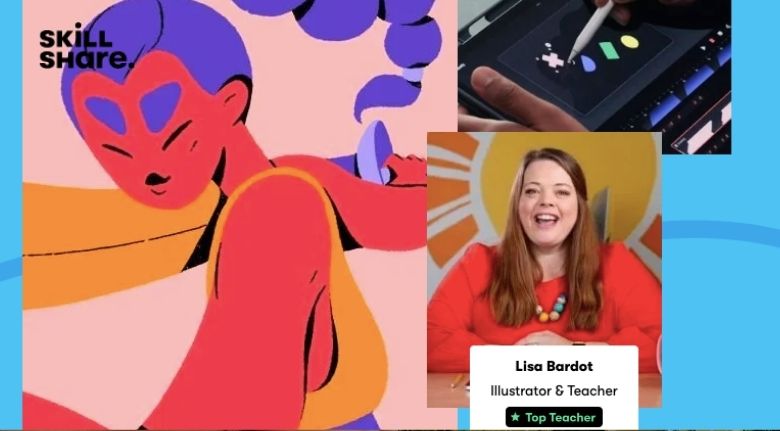
Skillshare classes are taught by creative professionals, entrepreneurs, and experienced practitioners across different disciplines. The platform currently highlights thousands of classes and more than 9,000 teachers, covering areas from design and illustration to marketing, photography, animation, and creative careers.
Learning from different instructors can therefore be valuable even within the same subject. One teacher might explain technical fundamentals particularly well, while another could provide stronger guidance on developing a personal style or turning a skill into freelance work.
This variety also makes it easier to explore interests without committing to a completely new formal programme. Someone who begins with graphic design may discover an interest in animation, creative writing, photography, or entrepreneurship after exploring related classes.
The important thing is to remain selective. More content does not automatically mean more learning. Choosing classes that match your current objective can help prevent endless browsing from replacing actual practice.
Use instructors as sources of guidance, but allow your own projects to become the place where you develop an individual approach.
Turn New Skills Into Career and Portfolio Opportunities
Creative skills can have value beyond personal development. They can support freelance work, improve an existing job, strengthen a portfolio, or help someone explore an entirely new career direction.
Skillshare offers classes in creative career areas such as freelancing, marketing, social media, productivity, entrepreneurship, and business, alongside technical creative subjects. This combination can be useful because professional success often requires more than knowing how to use a particular tool. Freelancers, for example, also need to understand how to present their work, communicate with clients, market their services, and manage projects.
Portfolio development is another area where project-based learning can be particularly useful. Instead of completing a course and immediately moving on, consider improving the project you created during the class. Refine the design, write a short explanation of your process, and create variations that demonstrate different skills.
A collection of thoughtfully developed projects can communicate much more than a list of completed courses. Potential clients and employers can see what you can actually create.
The same principle applies to people who already work in creative or marketing roles. Learning new techniques can help them expand the services they offer. A graphic designer could explore motion graphics, for example, while a marketer might develop stronger skills in content creation, photography, or social media design.
Continuous learning can therefore become part of career development rather than something separate from professional life.

Make Creativity Part of Your Long-Term Growth
The biggest benefit of creative learning is not necessarily completing a certain number of classes. It is developing the confidence and curiosity to keep creating. Once learning becomes a regular part of your routine, you can continue exploring new ideas even after reaching your initial goal.
Skillshare supports this through Learning Paths, which are curated sequences of classes designed around particular skills or objectives. Members also have access to personalised recommendations, community features, projects, certificates, badges, and offline learning options.
The community element can be especially useful for people who normally learn alone. Sharing projects and receiving feedback can introduce new perspectives and make the process feel more social. Seeing what other learners are creating can also provide inspiration for your next project.
Membership provides access to the broader class catalogue rather than requiring learners to purchase individual classes separately. Skillshare currently offers a free trial in eligible circumstances, followed by a paid subscription for continued access; pricing can vary by location.
Before starting, it is worth deciding what you want to achieve. If your goal is to build a portfolio, choose classes that result in projects you can develop further. If you want to explore a hobby, select subjects that genuinely interest you. If career development is the priority, combine technical classes with courses covering freelancing, business, marketing, or productivity.
Creative growth does not happen simply because you watch more lessons. It happens when knowledge becomes action. The most useful class is often the one that motivates you to open your software, pick up your camera, start writing, sketch an idea, or build something you can actually share.
Skillshare brings learning, projects, community, and creative exploration into one environment, giving learners the flexibility to develop skills at their own pace. Whether you are starting from scratch or looking to expand an existing skill set, the platform can provide a practical space for experimentation.
The key is to treat every lesson as a starting point rather than a finish line. Learn something, practise it, make something with it, and then improve. That simple cycle can gradually transform online learning into real creative progress.