
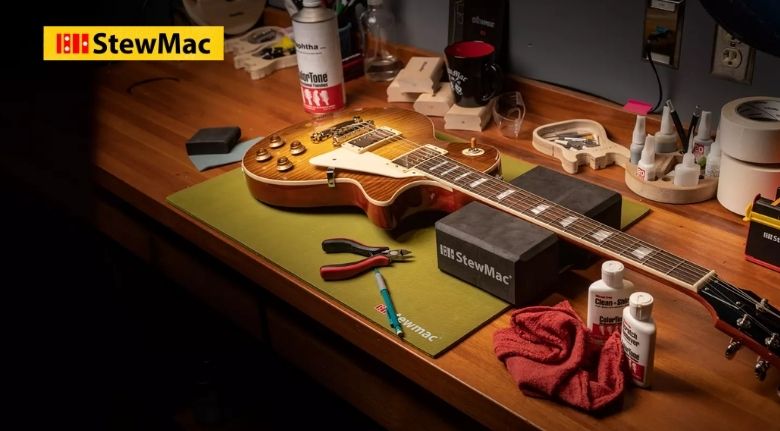
A guitar is more than a musical instrument. For many players, it is a creative partner, a source of inspiration, and an important part of their personal identity. Over time, however, even a well-loved guitar may need maintenance, upgrades, repairs, or a complete refresh. Frets can become worn, tuning machines may need replacing, electronics can develop problems, and the instrument may require adjustments to improve comfort and playability.
Learning how to care for a guitar can help musicians understand their instruments more deeply. It can also make simple maintenance tasks less intimidating. Whether you are a beginner exploring guitar building for the first time, an experienced player planning an upgrade, or a professional luthier working on detailed repairs, having suitable tools and reliable materials is essential.
StewMac has been supporting guitar builders, repair professionals, musicians, and curious makers since 1968. Its range includes guitar-building tools, repair supplies, instrument parts, electronics, tonewoods, finishing materials, kits, books, and educational resources. The brand focuses on helping people build, repair, modify, and maintain stringed instruments with greater accuracy and confidence.
Understand Your Guitar Before Starting a Project
Before buying tools or taking your guitar apart, it is important to understand the instrument and identify exactly what needs attention. A small problem can sometimes be solved with a basic adjustment, while a more complicated issue may require specialist knowledge or professional help.
Begin by examining the guitar carefully. Check the neck, fretboard, frets, bridge, tuning machines, strings, controls, and body. Look for visible damage, loose components, unusual buzzing, tuning instability, or changes in the way the instrument feels while playing.
The sound of the guitar can also provide useful clues. Fret buzzing may be connected to setup or fret conditions, while tuning problems could involve the strings, nut, bridge, or tuning machines. Crackling sounds from the electronics may indicate an issue with a connection, switch, or control.
It is helpful to write down the symptoms before starting work. Describe when the problem occurs, whether it affects every string, and whether it changes when you adjust the instrument. Taking photographs before removing any parts can also make reassembly easier.
Beginners should start with simple, low-risk tasks such as cleaning, string changes, basic measurements, and learning how different parts function. More advanced work, including fret leveling, neck shaping, structural repairs, or electronic modifications, should be approached slowly and with suitable guidance.
Understanding the problem first helps prevent unnecessary purchases and reduces the risk of making an adjustment that creates a new issue.

Choose Tools According to the Job
The right tools can make guitar work more accurate, efficient, and comfortable. A general household toolkit may be useful for basic tasks, but guitar building and repair often require specialized equipment designed for the shape, scale, and delicate surfaces of musical instruments.
For example, fretwork may require straightedges, fret files, radius sanding blocks, fret cutters, crowning tools, and measuring gauges. Nut work may require carefully sized nut-slotting files and precision measuring tools. Electronics projects may need soldering irons, wire cutters, wire strippers, screwdrivers, and testing equipment.
StewMac organizes tools by job and type, making it easier to identify equipment for specific projects. Builders can explore tools for fretting, finishing, routing, neck shaping, electronics, setup work, and general workshop use. Tool sets can also be useful for people who want to begin with a coordinated selection rather than choosing every item separately.
When selecting a tool, consider how often you will use it and how precise the task needs to be. A professional repair technician may benefit from investing in specialized equipment, while a beginner may prefer a smaller set of essential tools for occasional maintenance.
Quality matters because poorly fitting tools can damage screws, surfaces, or components. A correctly sized screwdriver is safer than forcing an unsuitable one into a screw head. Similarly, accurate measuring tools help prevent mistakes when working on fret height, string action, neck relief, or bridge placement.
A good workshop does not need to contain every tool immediately. It should grow gradually as your skills and projects develop.
Explore Guitar Building With Kits and Components
Building a guitar from individual parts can be an exciting way to learn how the instrument works. It allows makers to understand the relationship between the body, neck, fretboard, hardware, electronics, and finish. It also provides opportunities to make creative decisions about appearance and performance.
For first-time builders, a guitar kit can offer a more structured starting point. Kits typically bring together major components and provide instructions that guide the builder through stages such as shaping, sanding, finishing, assembly, wiring, and setup. They still require patience and attention to detail, but they can make the project feel more manageable.
Before starting a kit, prepare a clean and organized workspace. Make sure you have enough room to support the instrument securely and store small parts safely. Read the instructions from beginning to end before beginning the first step. This helps you understand which tools and materials will be needed later.
It is also useful to plan the finish in advance. The finish affects the appearance of the guitar and may involve several stages of sanding, staining, sealing, spraying, drying, and polishing. Each product should be used according to its instructions, with appropriate ventilation and protective equipment.
For people who prefer a more customized approach, individual parts and hardware can be selected separately. Bridges, tailpieces, tuning machines, knobs, pickguards, strap buttons, nuts, necks, and other components can help transform an existing instrument or support a completely original design.
The most rewarding part of guitar building is often the learning process. Every stage teaches something about precision, materials, patience, and how small details influence the final instrument.
Improve Playability Through Careful Setup Work
A guitar that is properly set up can feel more comfortable and respond more consistently. Setup work may involve checking neck relief, string height, fret condition, nut slots, intonation, pickup height, and tuning stability.
One of the most important habits is measuring before making adjustments. Avoid changing several settings at the same time because it becomes difficult to identify which adjustment affected the result. Make one small change, test the guitar, and then decide whether another step is necessary.
String action is the distance between the strings and the fretboard. If it is too high, the guitar may feel difficult to play. If it is too low, unwanted buzzing may occur. The ideal setup depends on the instrument, playing style, string gauge, and personal preference.
Neck relief is another important factor. The neck needs an appropriate amount of curvature to allow the strings to vibrate freely. Truss rod adjustments should be made carefully and gradually. If you are unsure, consult a qualified technician rather than forcing the adjustment.
Fretwork can also influence playability. Uneven, worn, or damaged frets may create buzzing or uncomfortable playing positions. Fret leveling, crowning, and polishing require precision, so beginners should practice on suitable materials or seek guidance before working on a valuable instrument.
StewMac provides tools and educational materials for many of these tasks, including straightedges, gauges, fret files, sanding tools, and setup equipment. Learning to use these tools correctly is just as important as owning them.
A careful setup is not about making the guitar conform to one universal standard. It is about creating a balance between comfort, sound, tuning stability, and the way the player uses the instrument.
Maintain Hardware, Electronics, and Finishes
Regular maintenance can help extend the useful life of a guitar. Small habits, performed consistently, are often more effective than waiting until a major problem develops.
Start with basic cleaning. Use suitable products for the guitar’s finish and avoid applying strong household chemicals to delicate surfaces. The fretboard may require different care from the body, depending on its wood and finish. Always follow the manufacturer’s recommendations for the instrument and cleaning product.
Hardware should be checked periodically. Loose strap buttons, bridge screws, tuning machine nuts, and control knobs can affect reliability and performance. Tighten components carefully, but avoid excessive force that could damage the wood or threads.
Electronics also benefit from inspection. If a guitar develops crackling, intermittent sound, or weak output, check the cable, battery where applicable, switches, controls, and visible wiring. Soldering work should only be attempted with suitable tools and safe working practices.
Finishing and polishing projects require patience. Sandpaper should be selected according to the stage of the project, and surfaces should be cleaned between steps. Rushing through sanding or applying too much finish can create uneven results.
A clean and organized workbench is especially important when dealing with small hardware or electronic components. Use trays, containers, labels, or photographs to keep parts organized during disassembly.
StewMac also offers cleaning, polishing, finishing, glue, tape, sanding, and other workshop supplies. These materials can support both routine maintenance and more advanced restoration projects.

Develop Your Skills Through Practice and Learning
Guitar building and repair are skills that improve through practice. Even experienced makers continue learning because every instrument presents different materials, construction methods, and challenges.
Start by learning the names and functions of the main guitar components. Next, practice simple tasks such as changing strings, cleaning the instrument, measuring string action, and identifying common hardware. As your confidence grows, you can explore more detailed projects.
Educational resources can be particularly helpful when learning technical work. Step-by-step instructions, videos, books, diagrams, and project guides can explain the order of operations and show how tools should be used. Watching a process once is useful, but repeating it carefully is what builds practical understanding.
It is also wise to practice on inexpensive or spare components before working on a valuable guitar. For example, you could practice soldering on spare wire, test finishing methods on scrap wood, or learn basic fret filing on a separate piece of material.
Keep notes about each project. Record the tools used, measurements taken, problems encountered, and changes made. These notes can become a personal reference library over time.
A supportive guitar-making community can also provide inspiration. Other musicians, builders, repair technicians, and hobbyists often share techniques, project ideas, and lessons learned from mistakes.
StewMac’s focus on tools and education reflects the idea that building and repairing instruments is not only about completing a task. It is also about developing knowledge and confidence.
Whether you are maintaining your first guitar or creating a custom instrument from the ground up, the process can deepen your connection with music. With suitable tools, careful preparation, and a willingness to learn, guitar care can become an enjoyable creative activity rather than a difficult responsibility.